 Written by
 The next era of lunar exploration is entirely dependent on a high-stakes commercial tech showdown. To hedge its bets against development delays, NASA has pitted Elon Musk’s SpaceX against Jeff Bezos’s Blue Origin, giving both companies contracts to build competing Human Landing Systems (HLS).
Instead of traditional, government-built capsules, these corporate giants are designing reusable, cutting-edge spaceships capable of transporting humans from lunar orbit down to the South Pole. Here is the definitive tech breakdown for your TGX blog post:
The Heavyweights: Starship HLS vs. Blue Moon
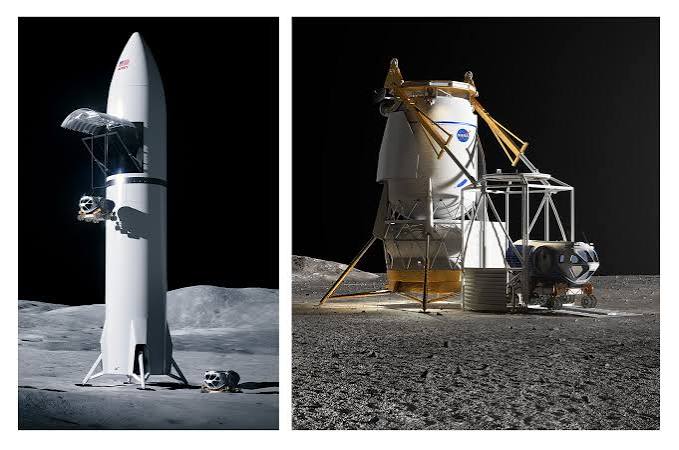
- SpaceX Starship HLS: A colossal 52-meter-tall spacecraft providing 600 cubic meters of habitable space—roughly the size of a Boeing 747 cabin. It relies on a high-tech elevator to lower astronauts to the surface and boasts a massive 100-metric-ton cargo capacity.
- Blue Origin Blue Moon (Mark 2): A highly stable, traditional-profile landing architecture built specifically to fit inside Bezos’s New Glenn rocket fairing. Wrapped in distinctive thermal gold foil, it uses liquid hydrogen and liquid oxygen to efficiently sustain crew and cargo.
The Core Technology Challenge: In-Space Refueling
- The Gas Station Dilemma: Neither lander can carry enough fuel to launch from Earth and make it to the Moon on its own.
- The SpaceX Solution: SpaceX is developing orbital fuel depots and tanker variants of Starship. They will need to launch multiple consecutive “tanker” flights to fill an orbital depot before the main lander can top off its tank and head to the Moon.
- The Blue Origin Solution: Blue Origin is building the Cis-Lunar Transporter, a specialized space tug designed to ferry cryogenic propellants across deep space to keep their lander operational.
Up Next: The 2027 In-Orbit Rehearsal
- Artemis III Reality Check: Rather than risking a surface landing right away, NASA reconfigured the late 2027 Artemis III mission into a low-Earth orbit test flight.
- The Objective: Four astronauts aboard the Orion capsule will practice crucial rendezvous and docking maneuvers directly with both Starship and Blue Moon prototypes to prove they can operate in tandem before heading to the Moon for the 2028 Artemis IV landing.
If you are interested, I can also break down how much NASA is paying each company or detail the uncrewed test flights both landers must complete later this year. Let me know what you need next for the TGX draft!